
Why practice oral communication across the S.T.R.E.A.M.?
Learners show what they understand when they explain a solution, defend a claim, describe a process, interpret a text, demonstrate a skill, or respond to questions. Regular speaking and listening practice helps teachers hear developing understanding before a final assessment. It also helps learners organize thinking, use evidence responsibly, adapt ideas for an audience, listen across differences, and gain confidence for classrooms, workplaces, communities, and civic life.
A repeatable process: watch, question, evaluate, discuss, communicate
This series turns everyday classroom moments — a TED Talk, a persuasive message, a student presentation — into structured practice for purposeful speaking and active listening. Each episode below offers a short video, a classroom-ready framework, and discussion questions that work across science, technology, engineering, arts, mathematics, English, social studies, and religious reflection.

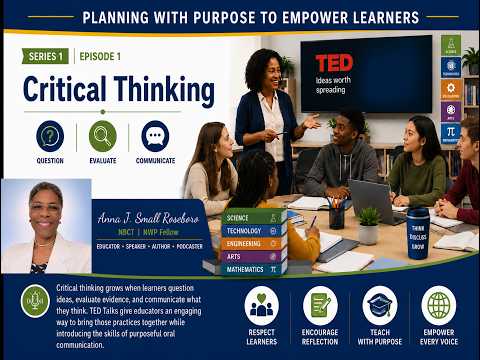
Watch, Question, Communicate: Learning from TED Talks
Turn TED Talks into active learning across the S.T.R.E.A.M. This episode shows teachers of teens and adults how learners can watch purposefully, question ideas, evaluate evidence, discuss perspectives, and communicate what they understand. Adaptable examples connect oral communication with science, social studies, technology and engineering, religious reflection, English, arts and athletics, music, and mathematics.
- Introduces a repeatable process: watch, question, evaluate, discuss, and communicate.
- Shows how a short TED Talk or comparable presentation can become a flexible instructional text.
- Offers cross-curricular applications for middle school, high school, college, and adult learning.
- Emphasizes active listening, evidence checking, discussion, and clear oral response.

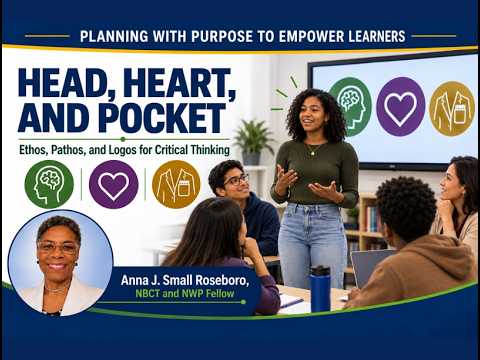
Head, Heart, and Pocket: Ethos, Pathos, and Logos
Help learners recognize what makes a message convincing. Using the memorable frame of head, heart, and pocket, this episode connects logos, pathos, and ethos with reasoning, human connection, and credibility. Teachers can use this approach to analyze talks, demonstrations, announcements, and presentations — and to help middle school, high school, college, and adult learners create clearer, more responsible messages.
- Pairs logos with head/reason, pathos with heart/emotion and values, and ethos with pocket/credibility.
- Guides learners in analyzing how speakers earn trust, build connection, and support claims.
- Applies to speeches, classroom demonstrations, announcements, discussions, and presentations.
- Supports critical thinking as well as responsible, audience-aware persuasion.

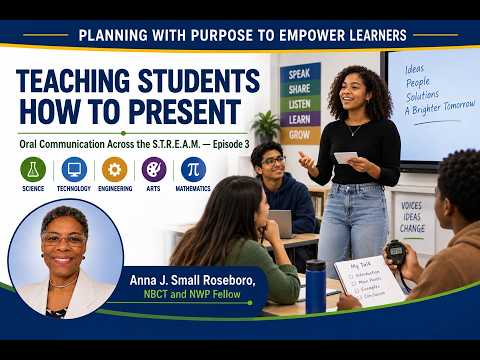
Teaching Students HOW to Present: Practice, Notice, Revise — and Use Eli’s Game
Students need more than an assignment to “give a presentation.” This episode offers practical ways to teach how presenting works through modeling, low-stakes rehearsal, observation, feedback, and revision. Eli’s Game adds a playful thirty-second speaking challenge that helps learners notice posture, gestures, voice, eye contact, organization, and audience awareness. Useful from middle school through college and adult learning.
- Breaks effective presenting into teachable organization, delivery, and audience choices.
- Uses brief, low-stakes speaking opportunities before formal or graded presentations.
- Introduces Eli’s Game as a respectful way to notice and discuss presentation behaviors.
- Encourages reflection and revision so practice becomes visible growth and confidence.
Video Links and Related Resources
All three episodes at a glance — tap any video to watch on YouTube. More clips are coming as new episodes are released.
Oral Communication Across the S.T.R.E.A.M. — practice across courses, build confidence for life.